Salon Digital Signage: Scale From One Site to Many
Salon digital signage that scales from one location to many. See how marketing directors keep branding consistent, lift retail sales, and cut print costs.
The day you sign the lease on your second salon, your marketing job changes completely. What worked when you ran one location — a printed service menu at the front desk, a chalkboard promoting the new color line, a stylist who remembers to mention the retail special — stops working the moment you have to do it twice. Then three times. Then eight.
This is the point where most salon and spa marketing directors discover that their brand doesn't actually live in a brand book. It lives in whatever the front desk printed last week. Salon digital signage is how you take that back — one content library, one approval process, every screen in every location showing exactly what you intended.
Here's what that looks like in practice, what it costs, and how to roll it out without turning your second location into a science experiment.
Why salon marketing breaks at location two
Single-location salons run on proximity. You walk the floor, you see the promo isn't up, you fix it. That feedback loop disappears the second you're not in the building every day.
The specific failures are predictable:
- Price drift. Location one raised balayage pricing in March. Location two is still displaying the old rate because nobody reprinted the menu board.
- Promo lag. Your spring retail campaign launches Monday. Location three puts the signage up Thursday, and only because a manager happened to open the email.
- Brand erosion. Someone makes a "quick" sign with the wrong font, hangs it by the shampoo bowls, and now your brand has two identities.
- Dead retail space. The retail wall is your highest-margin square footage, and it's silent. Nobody is telling the client in chair four why the treatment oil is worth $48.
None of these are staff problems. They're distribution problems. Print has no update mechanism, and email-plus-good-intentions is not a distribution channel.
What salon digital signage actually does for a marketing director
Set aside the hardware for a moment. The reason this matters to a marketing role — rather than an operations role — is that screens turn your content calendar into something that actually reaches the client.
Service menus that change in seconds, not print runs
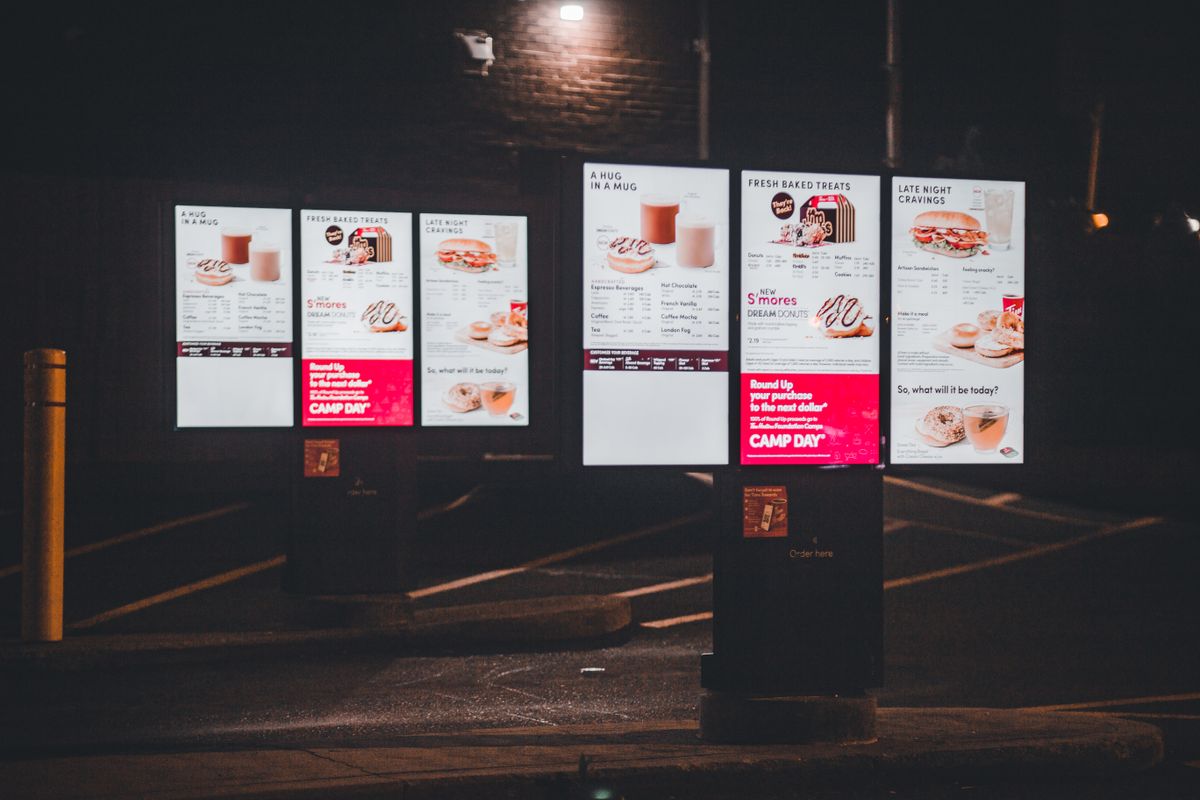
A digital service menu is a living asset. Seasonal pricing, new stylist levels, added services, holiday hours — you change it once in the cloud-based CMS and every location reflects it before the next client walks in. No reprint cost, no version confusion, no laminated sign with a sticker over the old price.
For a growing salon group this is usually the fastest ROI line item. Most multi-location salons reprint menus three to six times a year across every location. That spend goes away permanently.
Retail promotion where the buying decision happens
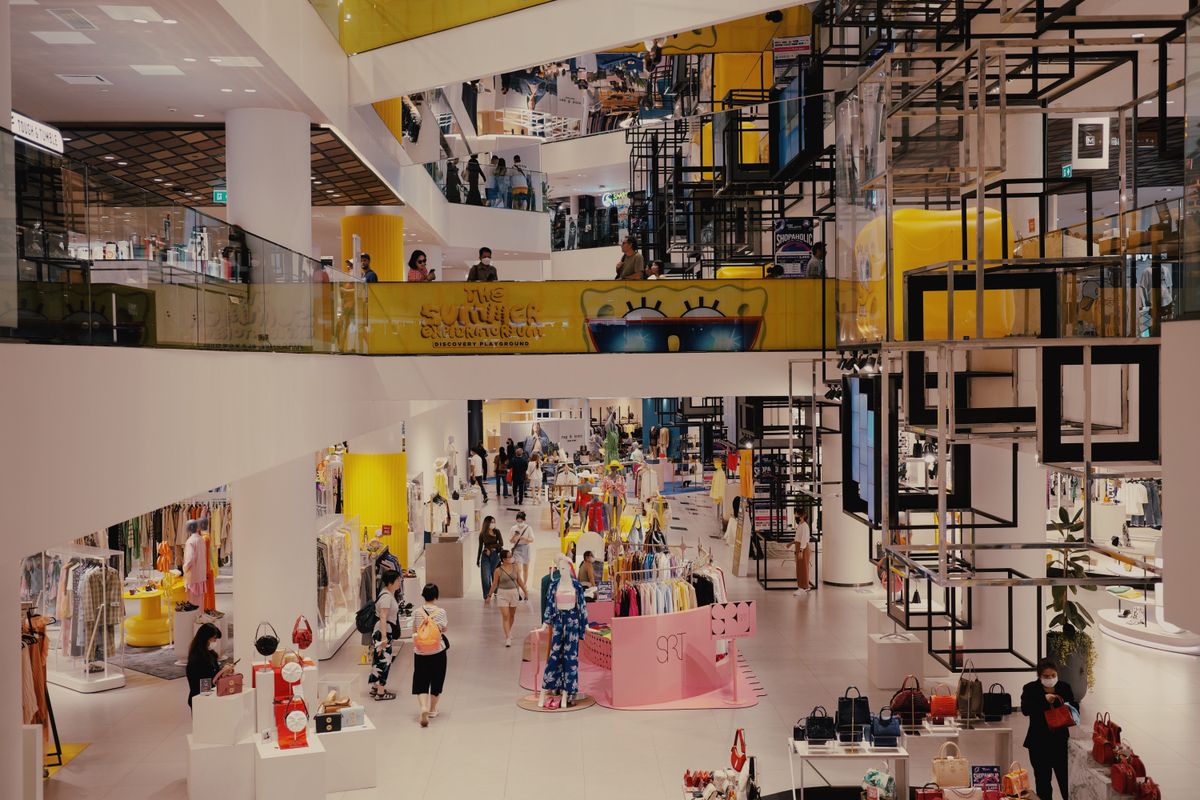
Salon retail attachment rates live or die on whether the client hears about the product before checkout. A screen at the styling station or in the color-processing area is the only marketing channel that reaches a client who is sitting still, unable to look at their phone, for 45 minutes.
This is the same principle that drives conversion in other storefront environments — we covered the mechanics in depth in our retail digital signage playbook, and the psychology translates directly to salon and spa floors.
Waiting areas that feel shorter than they are
Perceived wait time drops measurably when there is something to watch. Spa digital signage in a relaxation lounge can run treatment education, membership offers, and ambient content that supports the atmosphere you're charging for. In a busy salon reception, the same screen can run stylist spotlights and social feed content that turns a five-minute wait into brand exposure.
Team communication on the back-of-house screen
One screen in the break room handles the internal half of the job: daily targets, new product training, schedule changes, and sanitation reminders. Marketing directors at scaling salon groups often find this is the screen managers thank them for.
Building a system that scales, not a screen that sits there
The difference between signage that works at eight locations and signage that becomes a burden comes down to three architectural decisions you make early.
Central control with local flexibility
You want to push corporate content — brand campaigns, pricing, national promotions — to every screen at once. You also want the Scottsdale location to be able to promote their own stylist's certification without calling you. A proper multi-location digital signage platform gives you both: playlists you control centrally, plus permissioned slots a local manager can fill without touching anything else.
If your platform forces you to choose between "everything is locked" and "everyone can edit everything," you will end up either as a bottleneck or as a bystander. Neither scales.
Templates that protect the brand without protecting your calendar
The reason unapproved signage appears is that making approved signage is too slow. Solve that and the problem evaporates. A library of on-brand templates — truDigital ships with over 500 templates and apps — means a location manager can produce a correct-looking promo in four minutes instead of texting you a request and waiting two days.
Lock the fonts, colors, and logo placement inside the template. Let people fill in the copy. Your brand stays intact and you stop being a design help desk.
Content that updates itself
The signage that stays fresh is the signage nobody has to maintain. Weather, social feeds, Google reviews, appointment availability, and stylist schedules can all run as live apps that pull current data automatically. Build your playlist so that roughly half the airtime is self-updating and the other half is your campaign content. That ratio keeps screens from going stale between campaigns.
What to budget for
Salon groups are usually surprised by how little of the cost is software. A realistic first-year budget per location looks like this:
- Displays: Commercial-grade screens, typically two to four per salon (reception, retail wall, back of house). Consumer TVs work but are not built for 12-hour daily runtime.
- Media players: One small device per screen, or a player that drives multiple displays.
- Mounting and installation: Often the line item people forget. Budget for a professional install in client-facing areas.
- Software subscription: Per-screen, monthly. This is the line that scales with you.
- Content creation: Near zero if you use a template library, meaningful if you plan to commission custom motion graphics.
One line item worth scrutinizing: support. When a screen goes dark in your flagship location on a Saturday morning, the difference between unlimited US-based support and a ticket queue in another time zone is the difference between a ten-minute fix and a lost weekend of retail promotion. Ask specifically whether support is included and where it's staffed.
A 30-day rollout for your second location
Do not try to launch all locations simultaneously. Prove the system at one, then clone it.
- Days 1–7: Audit what's currently on your walls at location one. Photograph every printed sign. That inventory is your initial content list.
- Days 8–14: Build your template set and your first playlist. Decide the corporate-versus-local content split now, not later.
- Days 15–21: Install and run at the new location only. Watch which screens people actually look at and adjust placement before you commit to a standard layout.
- Days 22–30: Document the layout, the playlist structure, and the local manager permissions as your rollout standard. Every future location gets this packet on day one.
Salon groups that skip the documentation step end up with eight locations configured eight different ways. The packet is the whole point.
Questions to ask before you sign
Whether you're buying for the first time or replacing a system that isn't keeping up, the answers to these five questions predict how this goes at scale:
- Can I group locations and push content to a group, not just to individual screens?
- What permission levels exist for local managers, and can I restrict them to specific zones?
- Is support included, unlimited, and US-based — or metered?
- What happens to my screens if the internet at a location drops for an afternoon?
- How long does it take a non-designer to publish an on-brand promo from scratch?
If you're switching providers rather than starting fresh, the migration mechanics matter just as much as the feature list — our guide to switching signage providers walks through the transition sequence for multi-location operators.
Start with one screen you can measure
The most common mistake is trying to build the perfect system before turning anything on. Pick your retail wall at the new location, put one screen there, and track product attachment rate for 60 days. That single number will tell you more about your business case than any vendor deck.
truDigital works with beauty and personal-care brands like Cohere Beauty alongside multi-location operators across retail, fitness, and hospitality — cloud-based CMS, 500+ templates and apps, multi-location grouping, and unlimited US-based support included with every account.
Ready to see what your salon group would look like running on one content system? Request a demo and we'll walk through a build for your specific location count and layout.
See it in Action
Get a free, no-pressure demo of our unique platform and find out how it can transform your business.